A static ordered collection of objects.
-
-
Creates and returns an empty array.
-
Initializes a newly allocated array by placing in it the objects contained in a given array.
-
A bindings-compatible controller that manages a collection of objects.
-
A dynamic ordered collection of objects.
-
Type indicating a parameter is array of NSPoint structures.
-
A collection similar to an array, but with a broader range of available memory semantics.
-
Type indicating a parameter is array of NSRect structures.
-
Type indicating a parameter is an array of NSSize structures.
-
An ordered, random-access collection.
-
Explains how Objective-C objects in different threads or different processes communicate.
-
Explains how to put Cocoa objects into and remove them from a representation suitable for archiving.
-
About NSNetServices and CFNetServices
Explains how to implement Bonjour in Cocoa or Carbon apps.
-
Filtering Using a Custom Array Controller
Explains how to rapidly develop sophisticated user interfaces using Cocoa binding technology.
-
Searching File Metadata with NSMetadataQuery
Describes how to add Spotlight searching to your applications.
-
Explains how to implement the main, high-level interface to the Cocoa text system.
-
Creating the Subclass of NSDocument
Explains how to create document-based applications using the Cocoa document architecture on OS X.
-
Explains how to implement the main, high-level interface to the Cocoa text system.
-
Creating an NSTextView Object Programmatically
Explains how to implement the main, high-level interface to the Cocoa text system.
-
-
Putting an NSTextView Object in an NSScrollView
Explains how to implement the main, high-level interface to the Cocoa text system.
-
Grouping Related Objective-C Constants
Add macros to your Objective-C types to group their values in Swift.
-
Comparison of NSPredicate and Spotlight Query Strings
Describes how to specify queries in Cocoa.
-
Detects negative array bounds.
-
Shaped Array Collection Operations
Properties and methods a shaped array inherits from collection protocols.
-
Detects out-of-bounds access of arrays.
-
Renaming Objective-C APIs for Swift
Use the NS_SWIFT_NAME macro to customize API names for Swift.
-
Getting value based on age using an array
Return a value that changes according to an array of values as a function of the age of the requests.
-
Making Objective-C APIs Unavailable in Swift
Use the NS_SWIFT_UNAVAILABLE macro to prevent an API from being used in Swift.
-
Use bridged Foundation types in your Swift codebase to work with dates, times, and other values.
-
Creating a Shape Node from an Array of Points
Create jagged or smooth shapes from the same array of points.
-
Improving Objective-C API Declarations for Swift
Use the NS_REFINED_FOR_SWIFT macro to change how an API is imported into Swift.
-
Describes elements of best practice when writing code with Objective-C using ARC.
-
Describes the keys for a bundle's Info.plist file.
-
Accessibility Programming Guide for OS X: Implementing Accessibility for Custom Controls
Explains how to use the accessibility features built into OS X.
-
64-Bit Changes To the Cocoa API
Explains how to port Cocoa projects to 64-bit addressing.
-
-
Contains, in alphabetical order, descriptions of design patterns, architectures, and other concepts important in Cocoa development.
-
Describes elements of best practice when writing code with Objective-C using ARC.
-
Creating a Master-Detail Interface
Explains how to rapidly develop sophisticated user interfaces using Cocoa binding technology.
-
App Extension Programming Guide: Understand How an App Extension Works
Describes how to develop an app extension, which is an executable that adds functionality to other apps.
-
Explains how to put Cocoa objects into and remove them from a representation suitable for archiving.
-
Mac OS X Manual Page For scandir(3)
HTML versions of the iOS man pages.
-
What's New in iOS 9 and OS X 10.11
Describes how to use the Metal framework to implement low-overhead graphics rendering or parallel computational tasks.
-
Describes the data types for configuring application settings in the Settings application.
-
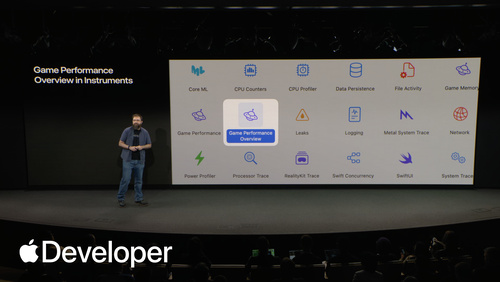 15:43
15:43
Explore power, performance, and scale for games on iPhone and iPad
-
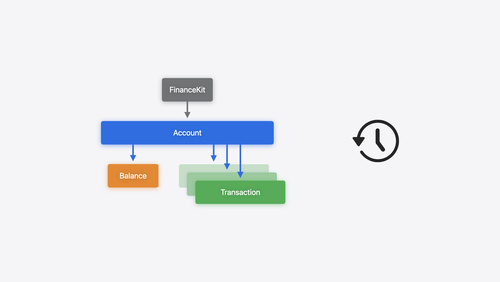 23:45
23:45
Learn how FinanceKit lets your financial management apps seamlessly and securely share on-device data from Apple Cash, Apple Card, and more, with...
-
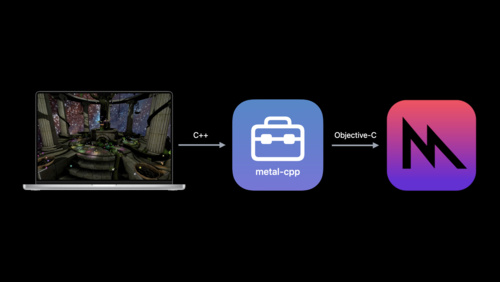 26:58
26:58
Program Metal in C++ with metal-cpp
-
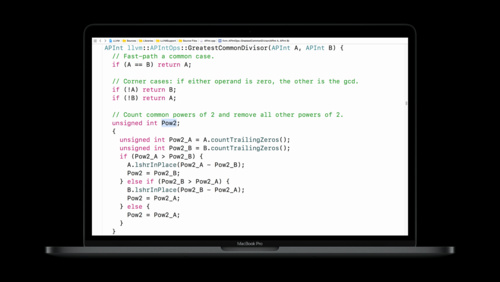 33:29
33:29
The Apple LLVM compiler in Xcode 9 has new language features, improved diagnostics, and more powerful optimizations. Keep up with the newest...
-
 51:04
51:04
Adopting Handoff on iOS and OS X
Handoff allows people to seamlessly move activities between devices and pick up right where they left off. Learn how to save, transfer, and restore...
-
 38:37
38:37
Enhancements to LLDB simplify life for Swift and Objective-C developers alike. Experienced developers will find new powers within the debugging...
-
 37:02
37:02
What’s New in AppKit for macOS
Learn about the latest APIs in AppKit and associated frameworks. Get an overview of the enhancements coming in macOS Catalina to help you save time,...
-
 42:42
42:42
Refine Objective-C frameworks for Swift
-
 17:09
17:09
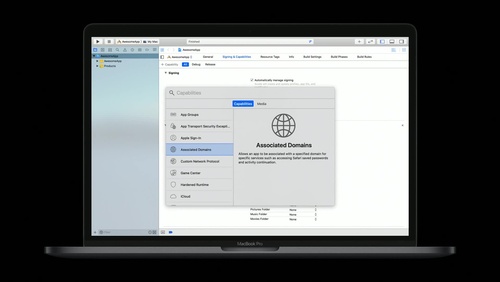
Universal Links allow your users to intelligently follow links to content inside your app or to your website. Learn how the latest enhancements in...
-
 11:11
11:11
Targeting Content with Multiple Windows
Learn how to target content for a specific window in your app. Find out how to identify which scene the system should open from a notification, a...