

-
Enhance your app’s audio experience with AirPods
Discover how you can create transformative audio experiences in your app using AirPods. Learn how to incorporate AirPods Automatic Switching, use AVAudioApplication to support Mute Control, and take advantage of Spatial Audio to create immersive soundscapes in your app or game.
Capítulos
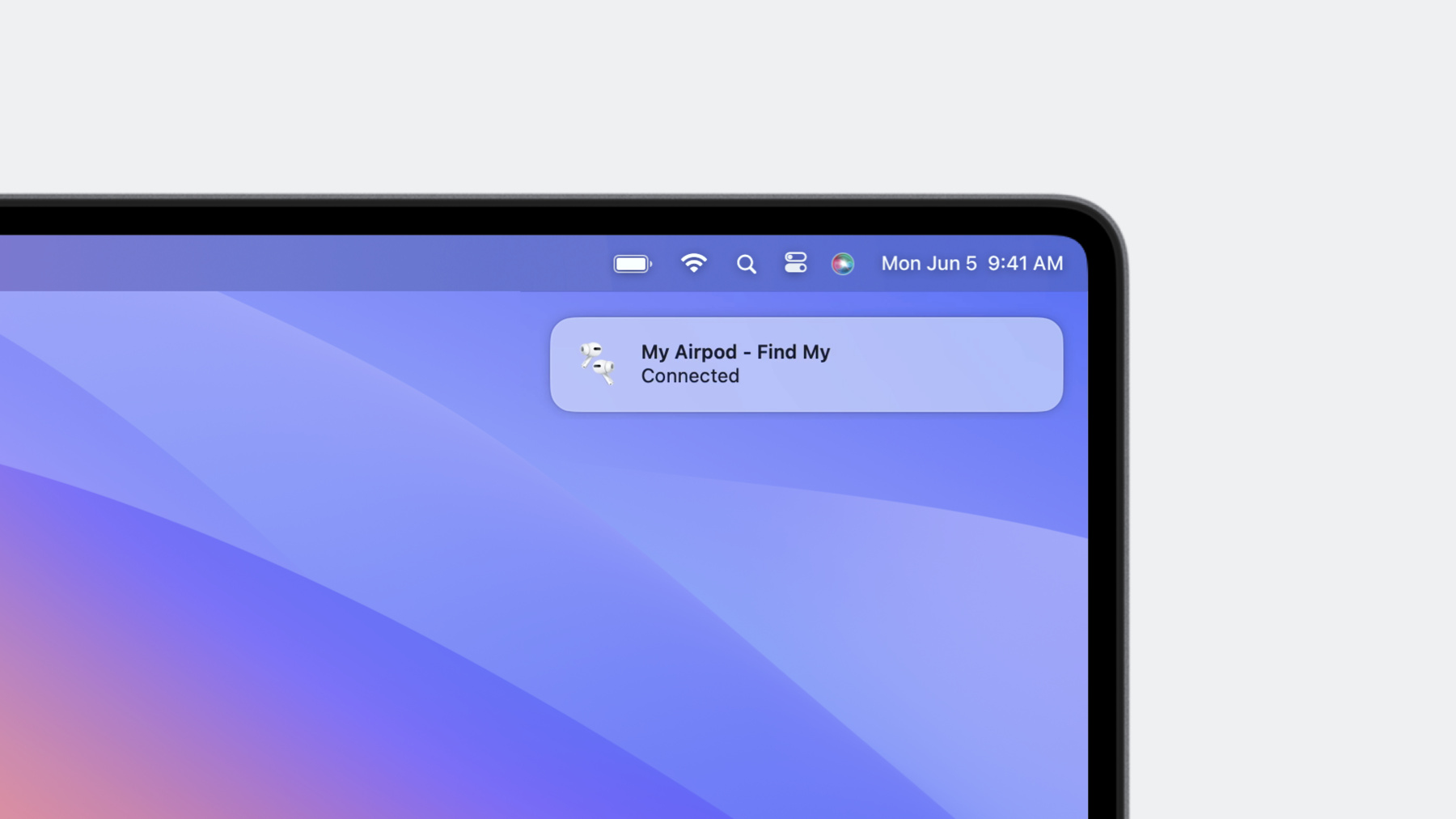
- 4:20 - AirPods Automatic Switching for macOS
- 6:41 - Press to Mute and Unmute
- 12:02 - Spatial Audio with AirPods
Recursos
Videos relacionados
WWDC23
WWDC21
-
Buscar este video…
-
-
8:25 - Press to Mute and Unmute API
// Adopting AVAudioApplication into your App import AVFAudio // Get the started instance let instance = AVAudioApplication.shared // Register for mute gesture notifications on Notification Center AVAudioApplication.inputMuteStateChangeNotification // Key for mute state AVAudioApplication.muteStateKey // Updating AVAudioApplication’s mute state instance.setInputMuted(...) // Reading AVAudioApplication’s mute state instance.isInputMuted -
10:52 - Configure the Input Mute State Change handler (macOS only)
// Configure the Input Mute State Change handler (macOS only)
instance.setInputMuteStateChangeHandler { isMuted in
	//...
	return didSucceed
}

// Optional: let CoreAudio mute your input for you (macOS only)
// Define the Core Audio property
var inputeMutePropertyAddress = AudioObjectPropertyAddress(
	mSelector: kAudioHardwarePropertyProcessInputMute,
	mScope: kAudioObjectPropertyScopeInput,
	mElement:kAudioObjectPropertyElementMain)

// Enable this property when you want to mute your input
UInt32 isMuted = 1; // 1 = muted, 0 = unmuted
AudioObjectSetPropertyData(kAudioObjectSystemObject,
						   &inputeMutePropertyAddress,
						   0,
						   nil,
						   UInt32(MemoryLayout.size(ofValue: isMuted),
						   &isMuted)
-