

-
Llegada de Cyberpunk 2077 a Mac
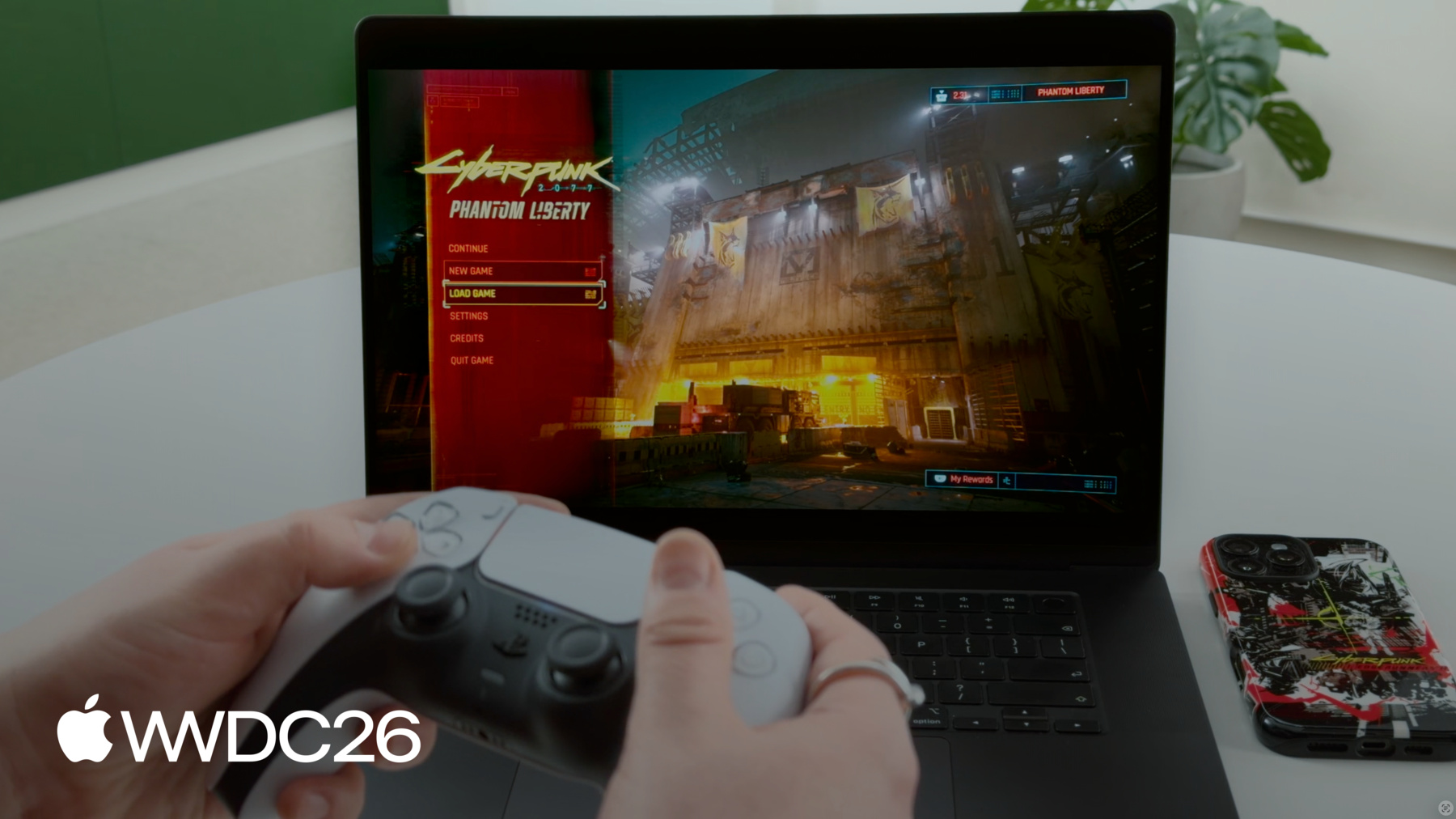
Echa un vistazo entre bastidores y obtén información de la mano de CD PROJEKT RED sobre cómo llegó Cyberpunk 2077 a la Mac, estableciendo un nuevo estándar para los juegos AAA en macOS. Explora cómo el equipo aprovechó el sólido hardware, el software y las herramientas de desarrollo de Apple para hacer realidad esta experiencia de alta fidelidad. Obtén información sobre cómo puedes aplicar técnicas similares a tus juegos. Descubre cómo la innovadora configuración preestablecida “For this Mac” (Para esta Mac) optimiza automáticamente la configuración gráfica para equilibrar la fidelidad visual y la velocidad de fotogramas en toda la línea de Mac.
Capítulos
- 0:00 - Introduction
- 0:44 - What is Cyberpunk 2077
- 2:57 - Why bring it to Mac
- 3:45 - How we brought it to Mac
- 4:50 - Game Porting Toolkit evaluation
- 13:05 - What we did to stand out
- 13:16 - "For this Mac" preset
- 26:59 - Next steps
Recursos
- Performing your own tone mapping
- Personalizing spatial audio in your app
- Download the Game Porting Toolkit
Videos relacionados
WWDC26
-
Buscar este video…
-
-
- 0:00 - Introduction
Garrett Austin (Apple Game Performance) introduces guest Paweł Sasko (Associate Game Director, CD PROJEKT RED) to share how Cyberpunk 2077: Ultimate Edition was brought to Mac with great performance across a wide range of devices.
- 0:44 - What is Cyberpunk 2077
An overview of the game — an open-world RPG set in Night City — and why it remains an industry benchmark: dense scene complexity and streaming, realistic lighting and materials, and demanding ray tracing and path tracing modes.
- 2:57 - Why bring it to Mac
The motivation for the port: CD PROJEKT RED's long history on Apple platforms, Apple silicon hardware maturing enough to hit a serious quality bar, and the opportunity to reach more players.
- 3:45 - How we brought it to Mac
Defining what "doing it properly" means via a three-part quality bar — visual fidelity, stable performance, and native feel — then executing the port: native builds, an adapted data pipeline, an architecture bridge, Metal Shader Converter, the native Metal rendering foundation, and MetalFX Upscaling for scalable performance.
- 4:50 - Game Porting Toolkit evaluation
Using Apple's Game Porting Toolkit to evaluate the Windows build in a translated environment before writing code — gauging feasibility, gathering CPU/GPU pressure signals, and identifying focus areas using profiling data, Metal HUD, and per-thread breakdowns to build a production roadmap.
- 13:05 - What we did to stand out
Turning the working build into a first-launch experience that feels native to macOS — adopting platform features across windowing and app switching, input devices, display, audio, and cloud saves.
- 13:16 - "For this Mac" preset
A device-based graphics preset that detects each Mac's hardware and auto-configures optimal settings — target FPS, MetalFX with Dynamic Resolution Scaling, resolution bounds, V-Sync, and HDR — tuned per device and demoed live in Dogtown.
- 26:59 - Next steps
Recommended actions: try the Game Porting Toolkit evaluation environment, analyze performance with Metal HUD, plan a great first-launch experience, and explore the related "Speedrun your game port with agentic coding" and "Find and fix performance issues in your Metal games" sessions.