CellWalk: The beauty of biology on visionOS
May 16, 2026
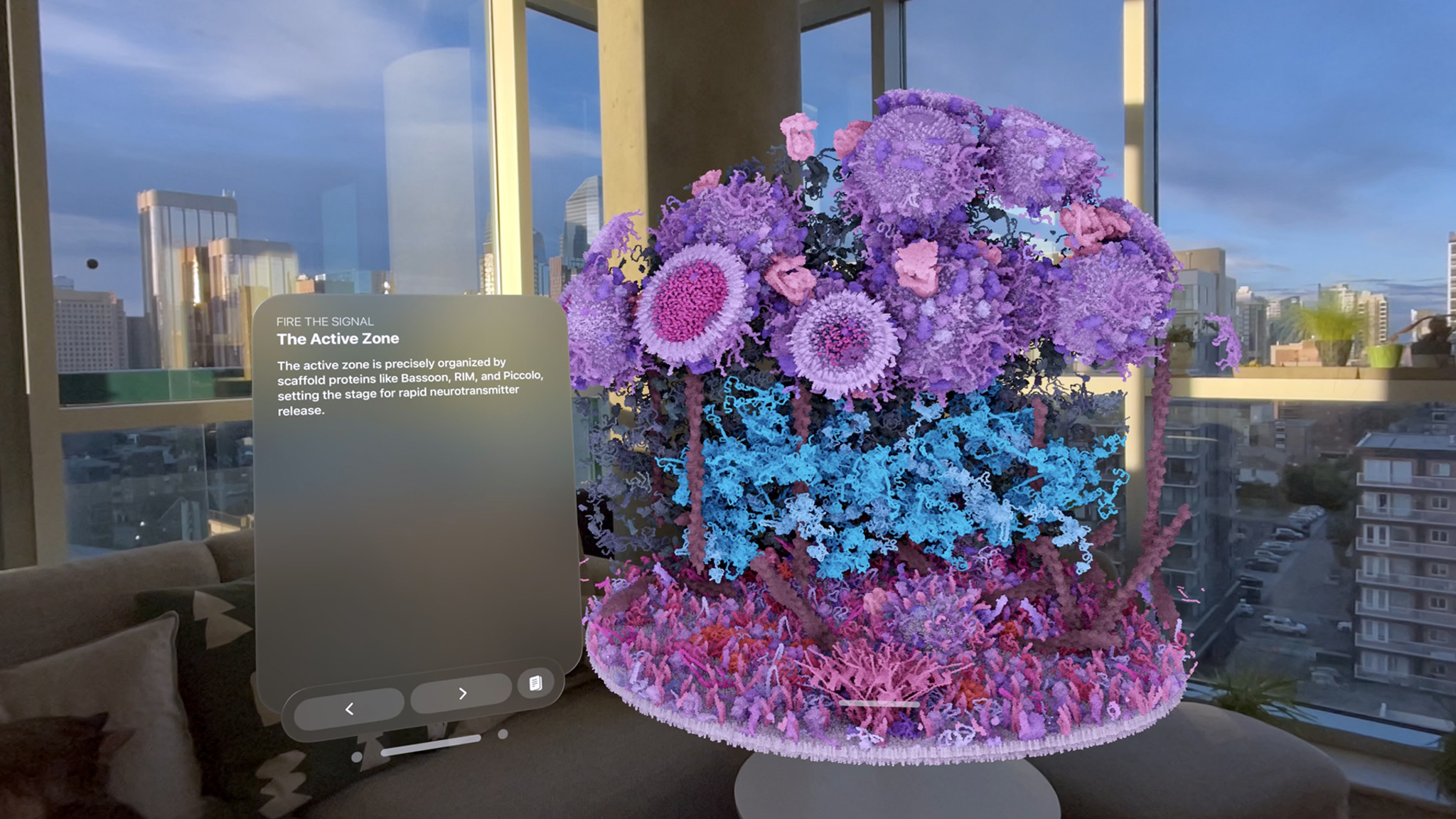
CellWalk is a biology textbook come to life. The incredible visionOS app offers people a window into biology, a chance to examine and explore vibrant 3D models of cellular structures.
Created for students and casual science lovers alike, the 2025 Apple Design Award finalist provides up-close images of life’s molecular masterworks, which are rendered in full color and accompanied by easy-to-understand explanations. People can pinch, pan, and orbit illustrations of complex organisms — like Mycoplasma bacteria, a 250-million-atom cell that’s rendered in intricate detail.
Thousands of structures are available for viewing on CellWalk, which transforms raw scientific data into “a chill, cinematic experience that takes you from one moment of awe to the next,” says Tim Davison, the app’s developer and co-creator.
CellWalk
- Available on: iPhone, iPad, Apple Vision Pro
- Team size: 2
- Based in: Canada
Download CellWalk from the App Store >
Davison was inspired to start work on CellWalk as a doctoral student at the University of Calgary. That’s where a professor in the school’s Department of Computer Science handed him a copy of David Goodsell’s landmark biology book, The Machinery of Life, which features eye-catching watercolor illustrations of the molecular world.
“Most biology textbooks are full of abstract diagrams,” Davison recalls. “But The Machinery of Life was dense and chaotic. I opened it up and thought, ‘What if you could actually go inside this book and look at these in 3D?’ That became my mission.”
Bringing CellWalk to life would take years of effort. Davison initially created 3D experiences for some “early virtual reality systems,” he says — and then watched as people struggled to figure out how to use the devices. “I was trying to create a product that people could use in their daily life and that anyone could use,” Davison says. “And visionOS was the best way to achieve that.”
“Their apps were beautiful”
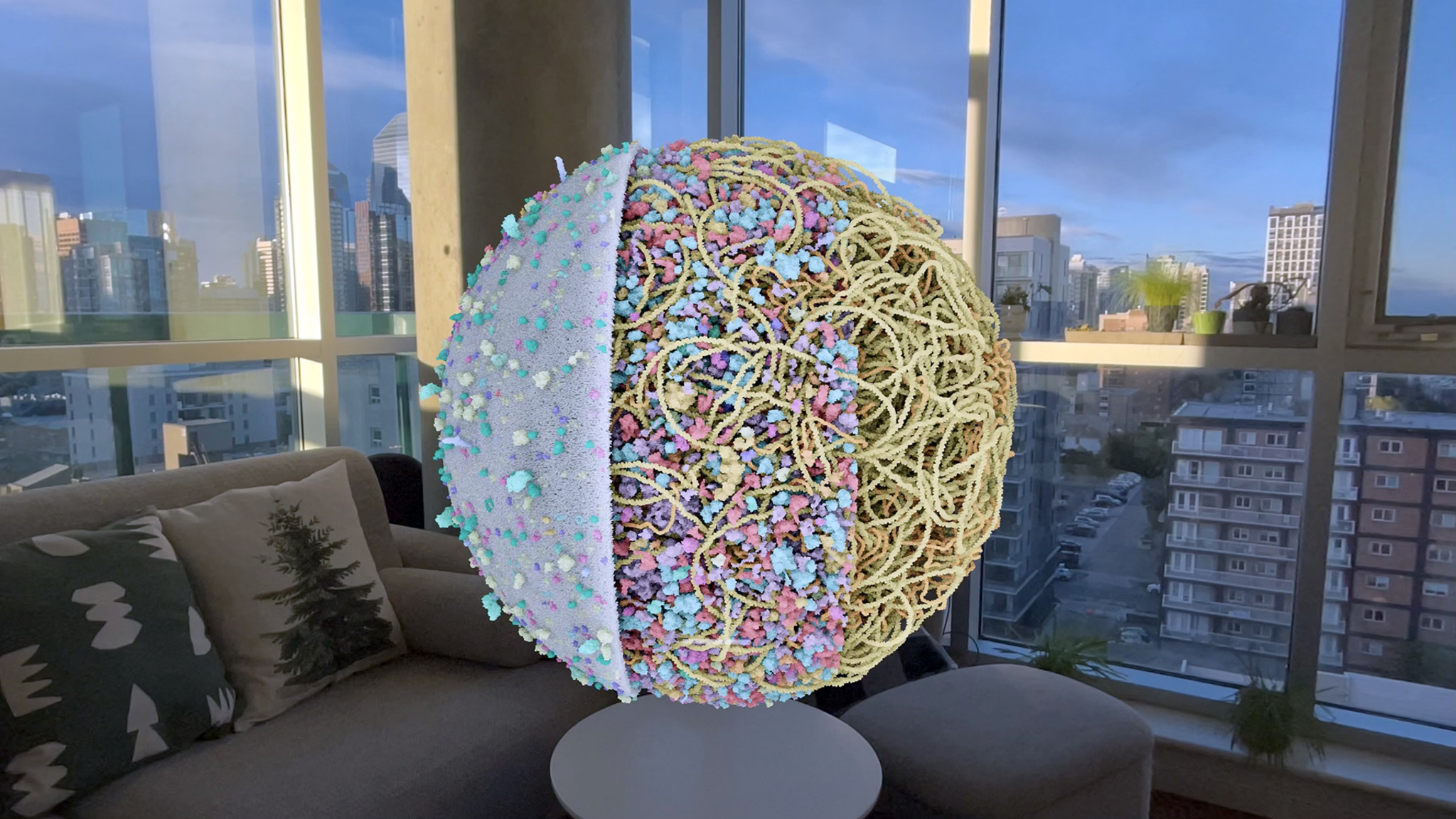
One of Davison’s goals was ensuring that CellWalk’s many enzymes, lipids, and ribosomes looked inviting. “We wanted a really rich color scheme,” Davison says. “And when we want to focus attention on something — like a DNA strand — we’ll desaturate and darken everything smoothly, in a way that filters out the noise and focuses your attention on just one thing.”
Making CellWalk as visually appealing as possible was important to Davison, who won multiple WWDC scholarships in the 2000s and 2010s. “One thing that struck me was how much the other developers cared about design,” he says. “It wasn’t just like, ‘Here’s this really cool technology I can create.’ Their apps were beautiful. That has informed everything I’ve worked on since.”
Biology itself is beautiful. It’s doing a lot of the work for us.
Tim Davison, CellWalk creator
Davison also wanted to ensure that, unlike a biology textbook, CellWalk would be fully interactive. The app allows people to drag, rotate, and cut into, say, a bacterial cell, and then provides accessible information to help them understand what they’re looking at. As Davison notes, people can tap on anything — even a neuron with 3.6 billion atoms.
Envisioning the machinery of life
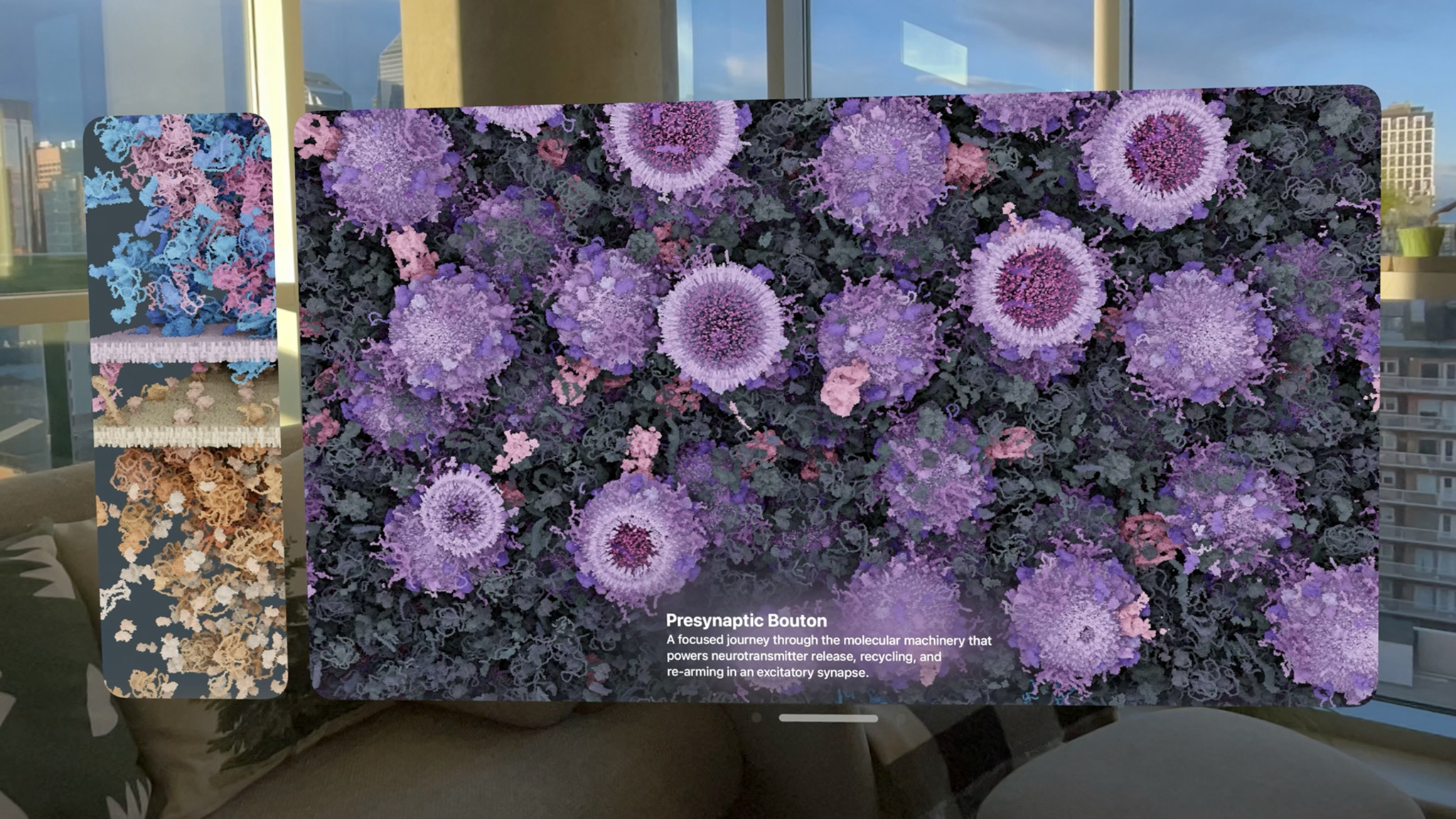
To ensure CellWalk’s models remain accurate and up to date, Davison uses data from the Worldwide Protein Data Bank, which maintains a continuously updated protein database. “Tons of new proteins are posted there every day,” Davison says. “So we’ve got this pipeline that brings in the latest and greatest information.” (On the Mycoplasma cell and a few others, he worked closely with the Center for Computational Structural Biology at the Scripps Research Institute — the home of The Machinery of Life author David Goodsell. “I got to work with the guy whose book inspired me,” he says.)
During the ten-plus years Davison has worked on CellWalk, he’s had a front-row seat to the evolution of spatial computing. The app wouldn’t have been a good fit, he says, with the clunky controllers and spare VR interfaces of the past. “Apple Vision Pro was just a whole rethinking of spatial computing,” he says. “I can give one to somebody who’s never used it before, and they instantly know how to use CellWalk.”
All of which is helping Davison realize his goal for CellWalk: to create an app that might help launch the next generation of biologists. He’s heard from several teachers eager to use CellWalk in their classes, and he solicits feedback from students to learn how they might use it in their own academic pursuits.
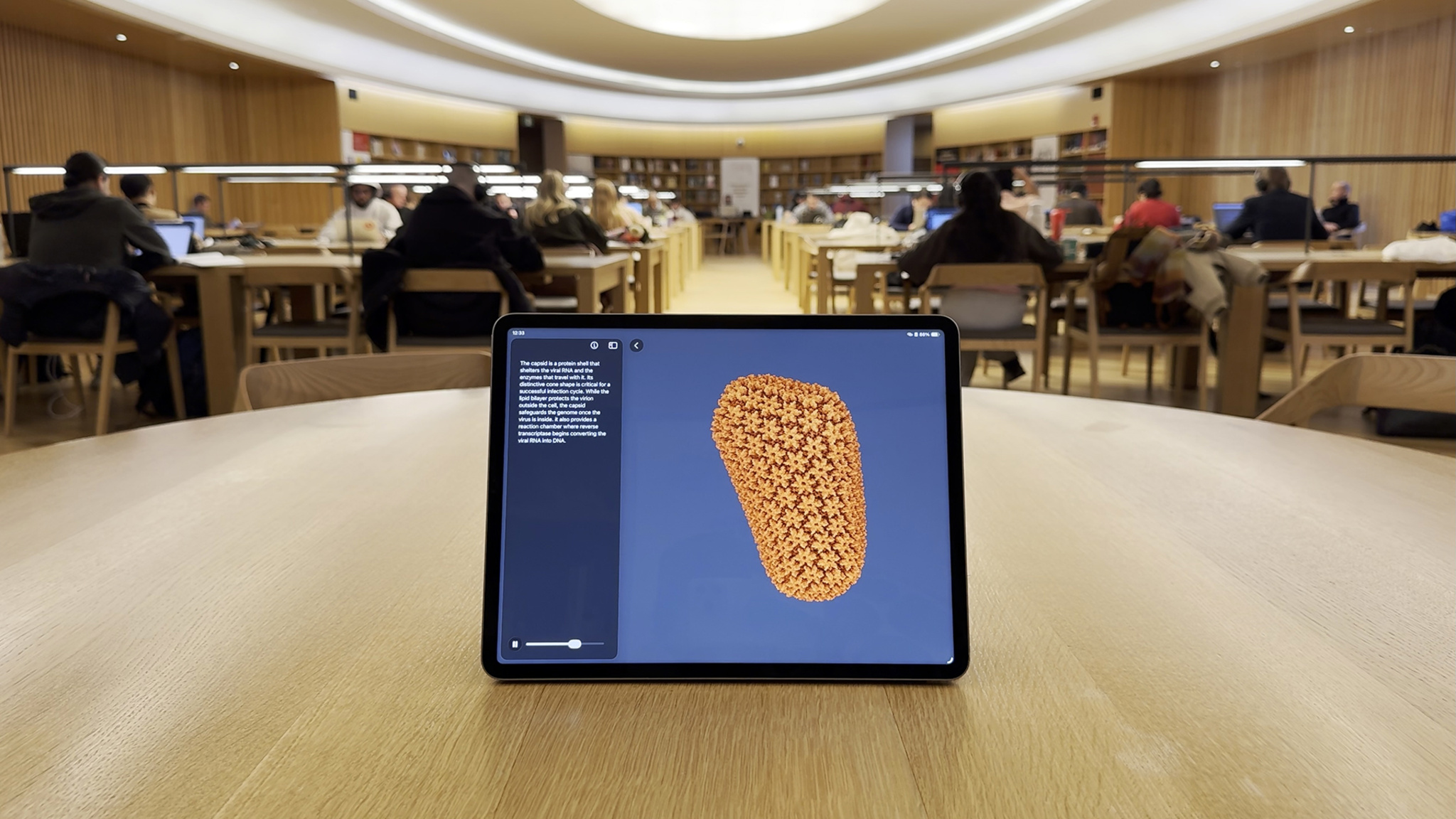
Who knows? Perhaps people who are busy zooming in and out of a colorful mRNA molecule today will end up looking at a real one in a lab a few years down the road.
If that’s the case, Davison will be happy — though he’s reluctant to take credit for nature’s work. “Biology itself is beautiful,” he says. “It’s doing a lot of the work for us.”
Keep reading
Developer stories explore best practices and philosophies from some of the most inventive developers in the Apple community. In each story, we go behind the screens with developers, designers, and engineers to find out how they brought their remarkable creations to life.