ADA Q&A: What a little Moonlitt can do
May 16, 2026
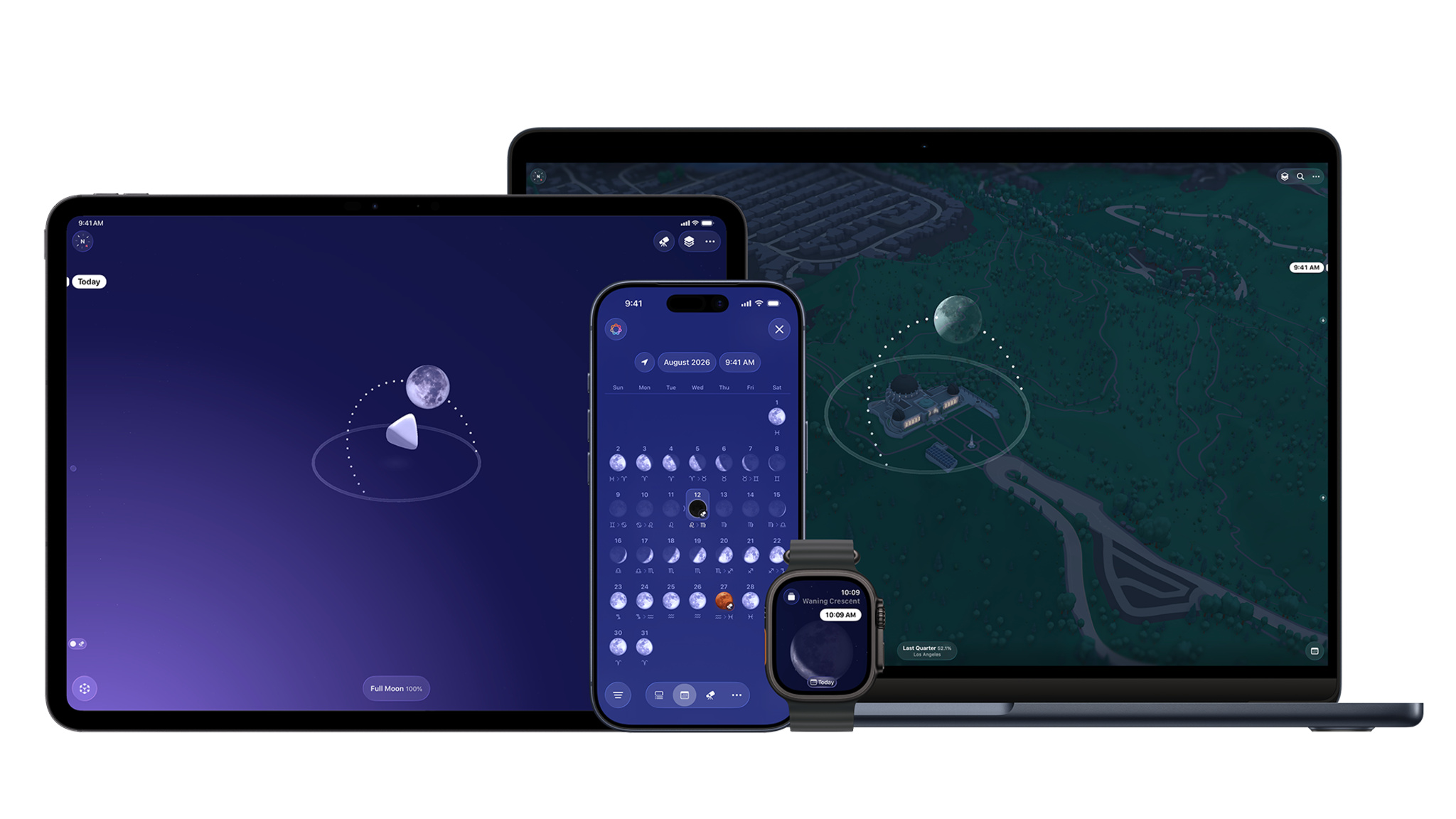
It’s been a big couple of months for the moon, and if this spring’s Artemis mission piqued your interest in all things lunar, this brilliantly conceived app can keep it going. Like its sister app (and 2024 Apple Design Award finalist) Sunlitt, this SwiftUI-built utility brings a simple elegance to minding everything from photography to celestial events. With broad platform support — check it out on Apple Vision Pro — best-in-class Liquid Glass integration, and easy onboarding, it’s an intuitive and beautiful way to keep your eyes on the skies.
We caught up with Nicolas Mariniello, Fabio Pizzano, and Raffaele Fulgente of Flipping Hues to talk about lunar movements, Liquid Glass, and how an App Store review changed the app’s direction.
Moonlitt
- Team name: Flipping Hues
- Available on: iPhone, iPad, Mac, Apple Vision Pro, Apple Watch
- Team size: 3
- Based in: Italy
- Category: Interaction
Download Moonlitt from the App Store >
After your success with Sunlitt, this feels like a logical next step.
Mariniello: Exactly. After working on sun-tracking tools for quite some time, the question came naturally: “What about the moon?” The moon sits at the center of so many cultures, traditions, and even professional workflows, often in ways that, much like the sun, are not immediately obvious. That intrigued us, so we set out to build a tool that felt beautiful and reliable.
How did you approach designing the feel of this app?
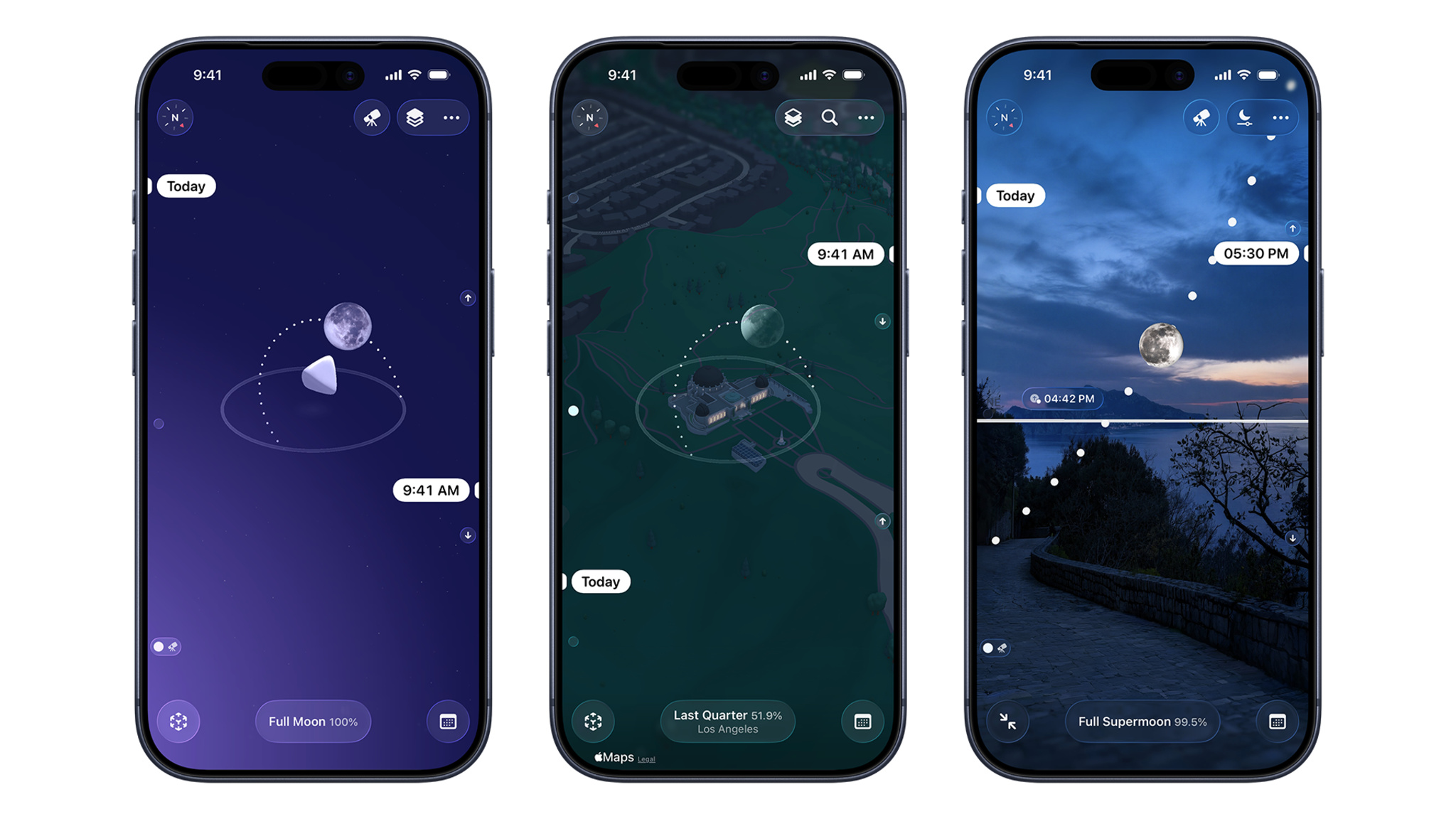
Pizzano: We wanted Moonlitt to reflect the elegance and quiet of the moon. But the moon also has a deeply layered system of movement and timing that can be difficult to translate into a clear app experience. So our challenge was to simplify that complexity through a thoughtful interface and spot-on interactions.
At what point did you feel like the design really clicked?
Pizzano: Honestly, it clicked the first time we tried Liquid Glass. Moonlitt had always been rich in content and visuals, colors and motion, but with Liquid Glass everything felt much more alive. It was like the interface was breathing.
Can you share a specific piece of feedback that genuinely changed your direction?
Fulgente: In September 2025, we received a review that said Moonlitt had not informed someone about an upcoming lunar eclipse. They were right: at the time, Moonlitt had no dedicated eclipse features. That review, together with unexpected traffic around the actual eclipse, made us realize how much potential there was in this area. Today, Moonlitt is also an eclipse tracker, with simulations, visibility maps, and guidance, and we’re expanding the experience even further for the two major eclipses coming in August 2026.
What surprised you most about how people actually used Moonlitt?
Fulgente: We know Moonlitt is used for everything from photography and stargazing to eclipse tracking. But we also keep discovering unexpected audiences: people using it for spiritual and ritual-based practices, tracking animal behavior, or even making very personal decisions around moon phases.
What’s something you’re proud of that might not be visible in the final product?
Mariniello: How much complexity disappears into the experience. Moonlitt brings together many layers: astronomical calculations, lunar cycles, moon and sun positions, location-based data, and 3D representations. None of that is simple, but the goal was never to make people feel the complexity. We wanted the app to feel elegant and easy to explore, so people can simply understand, track, and enjoy the moon, while all the magic happens under the hood.
Read more developer stories
Developer stories explore best practices and philosophies from some of the most inventive developers in the Apple community. In each story, we go behind the screens with developers, designers, and engineers to find out how they brought their remarkable creations to life.