ADA Q&A: Consume Me
May 16, 2026
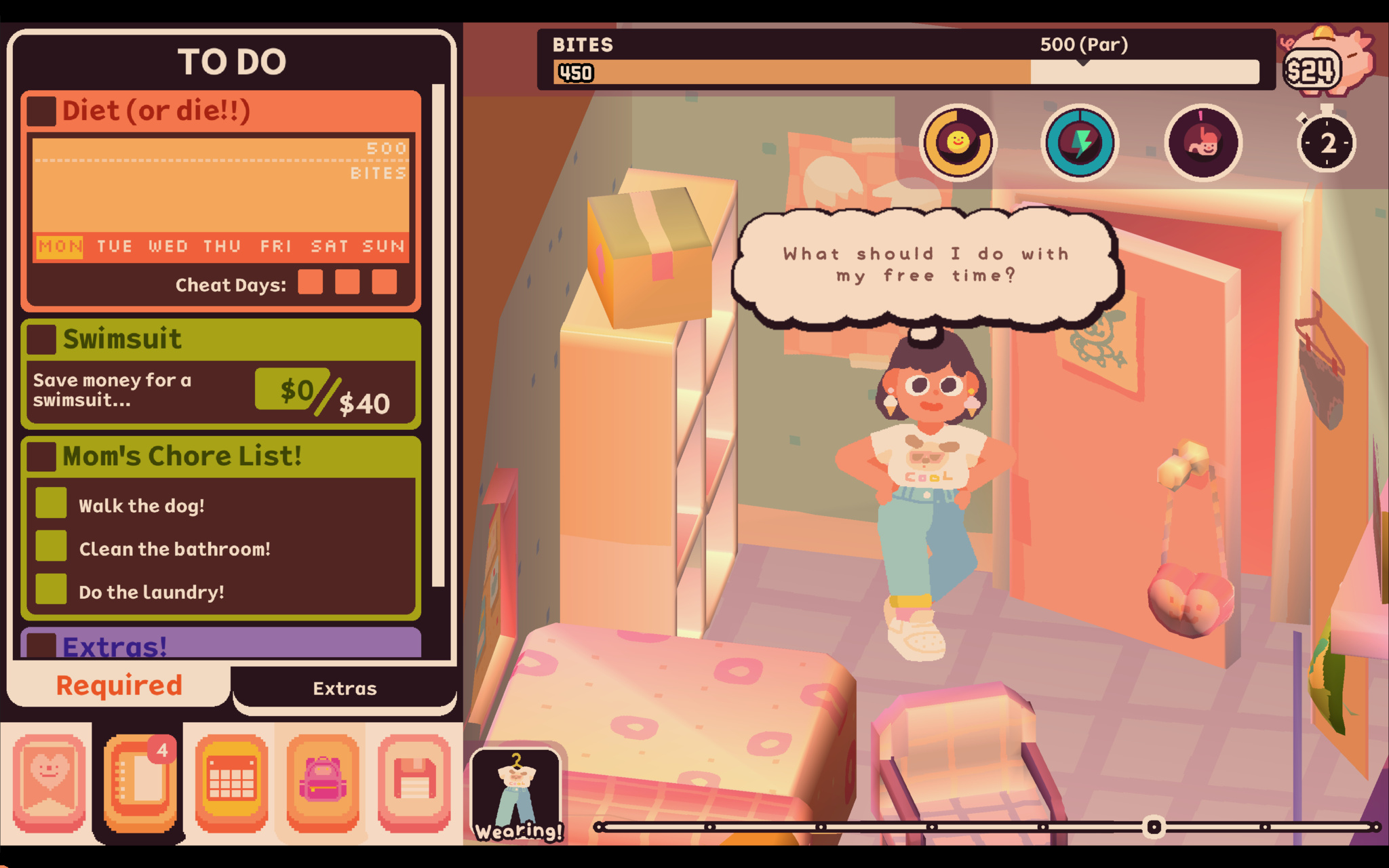
Consume Me is a deeply personal and autobiographical experience that deftly — and playfully — addresses themes of mental health, body image, and self-worth. At its core, the game is about the emotional realities of eating disorders, and it treats the subject matter with care and frankness. What’s especially impressive is how the game mechanics gradually mirror the narrative: The often frantic mini-games are designed to make its themes feel visceral, a clever way to convey a feeling that words can’t always capture.
We caught up with Hexecutable’s Jenny Jiao Hsia and AP Thomson to discuss what Thomson calls “a role-playing game, a schedule management life simulator, and a mini-game collection.”
(Note: Some answers contain game spoilers.)
Consume Me
- Team name: Hexecutable
- Available on: Mac
- Team size: 5
- Based in: United States
- Category: Social Impact
Download Consume Me from the App Store >
Tell us about what sparked the idea behind Consume Me.
Hsia: A few things. I took an art history class for video games in my sophomore year of university, and the final lecture focused on indie games. One stood out in particular: Lucas Pope’s Papers, Please. You play as a border control officer and decide whether to allow the person standing before you into the country. That game made it clear you could make a game about anything, even if the experience was not very fun, since games are essentially a collection of rules. And I was influenced by a lot of personal games based on autobiographical experiences.
This is a very autobiographical game for you.
Hsia: In high school, I filled my journals with numbers. I meticulously tracked the number of calories I ate. I had lists of foods I allowed myself to eat. And this extended to life beyond my diet — aesthetic, relational, and even academic goals. I created these messed-up rules and goals for myself to follow, thinking that if I stuck to them, I would find success. But of course, going down this path just led to a lot of misery and unhappiness.
After that indie games lecture and playing Papers, Please, it became clear that I could make a game about my dieting experience. And that’s what I ended up doing for the majority of my twenties.
What’s something you’re proud of that might not be visible in the final product?
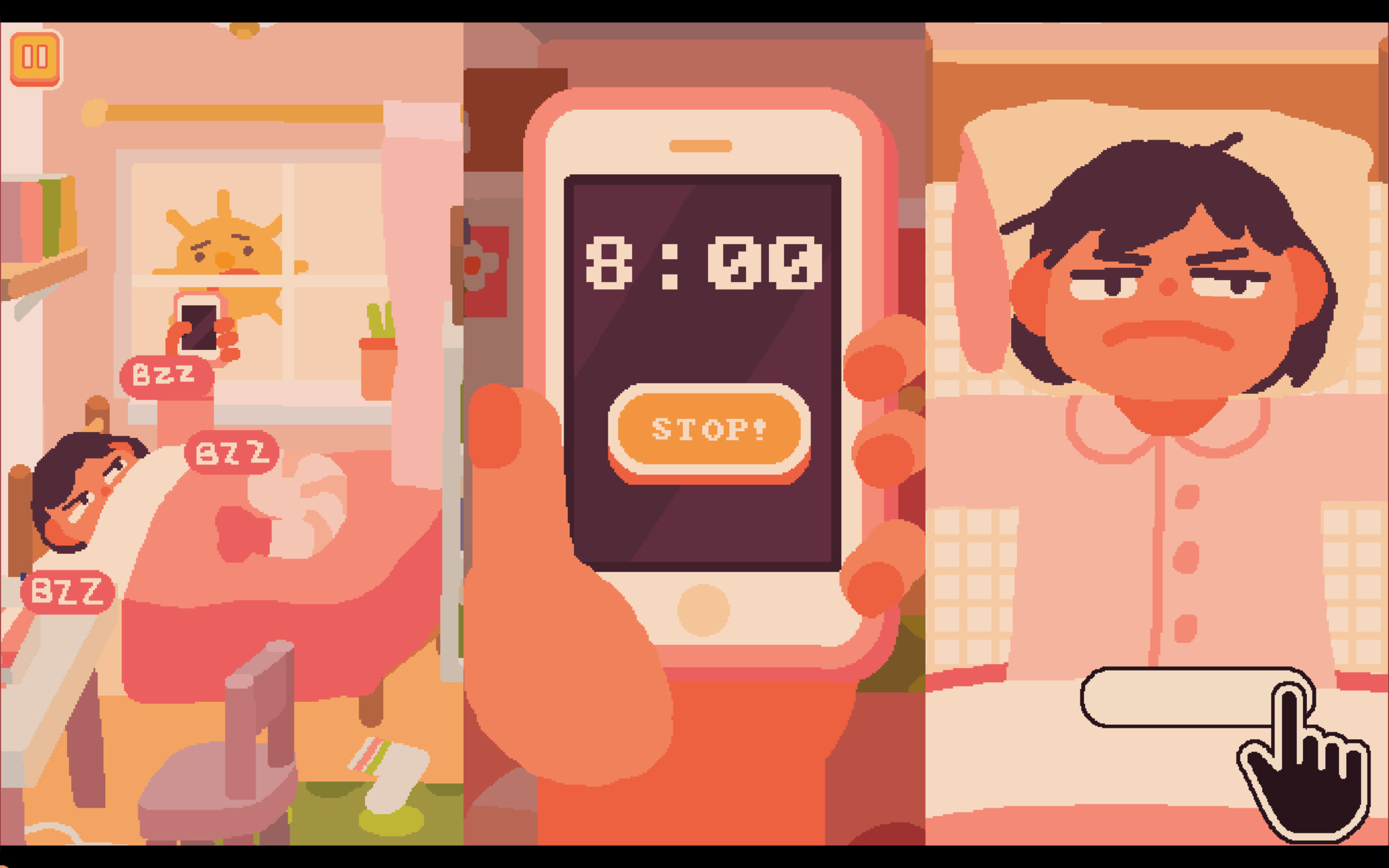
Thomson: There are some hidden systems that react to what the player is doing, like the random encounter system. Every in-game day, there’s a single schedule entry labeled “?????” where a random event occurs: Jenny gets splashed by a car and has to change her outfit, Jenny finds money on the ground, etc. This system is very simple: there’s basically a “deck” of events, and during each random encounter, it draws an event from the deck.
The twist is that actions taken by the player can secretly add or remove events from this deck, increasing or decreasing the probability that they occur. For instance, if Jenny drinks too much coffee or energy drinks, she might encounter an event where she crashes after too much caffeine. If Jenny chooses not to do any chores for several days, she might encounter an event where her mom yells at her and forces her to do some chores.
What was the hardest design decision you had to make?
Thomson: (This answer contains spoilers.) Probably how to actually end the game. There was a temptation to come up with a very “clean” ending where Jenny’s problems are resolved unambiguously and healthily. The problem was that ending didn’t feel true. Consume Me is an autobiographical game, which meant exploring the reality of how Jenny moved on from this period in her life, which occurred slowly and gradually over the course of several years. The ending we ultimately landed on is controversial among some players, but we think it works.
What advice would you give to a developer or designer just starting out?
Hsia: Keep the scope small if you’re starting out. It’s important to experience the entire journey, because working on the end of a game feels very different from working on the beginning of one, and you’ll learn a lot when you see it through to the end.
Read more developer stories
Developer stories explore best practices and philosophies from some of the most inventive developers in the Apple community. In each story, we go behind the screens with developers, designers, and engineers to find out how they brought their remarkable creations to life.